

Summary
- Aave V4 launched on Circle's Arc network around September 16 2026, enabling dollar-euro borrowing through USDC and EURC with shared liquidity pools.
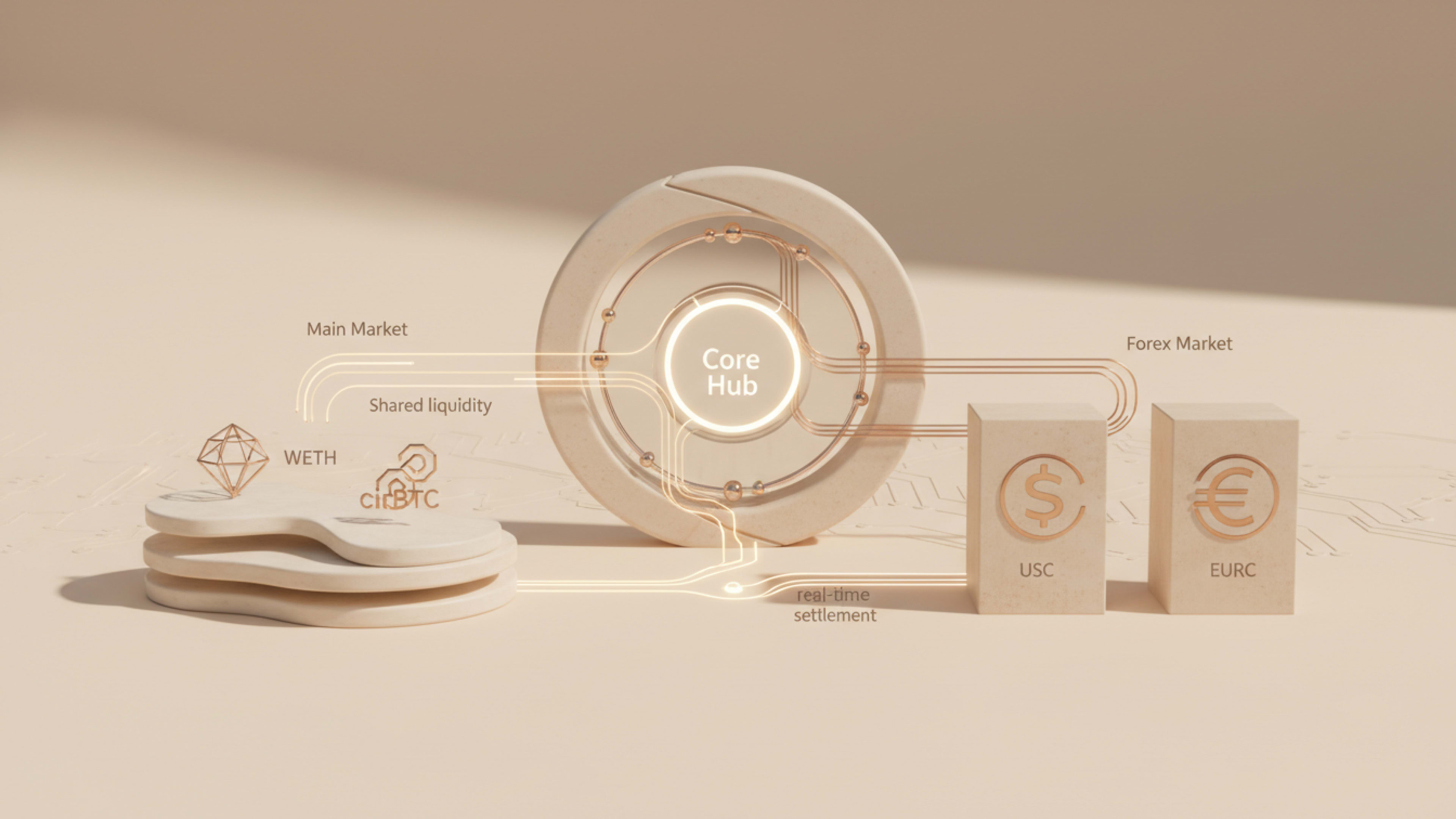
- The integration introduces a Core Hub alongside tailored Main and Forex markets designed for stablecoin-native lending and borrowing.
- Circle StableFX capabilities on Arc support real-time settlement and high-frequency trading flows between the two currency markets.
A trader in a dim home office stares at two side-by-side screens, one flashing USDC rates and the other showing EURC liquidity. The clock reads just past midnight in London, yet the numbers move in real time without the usual cross-border delays. The trader places a borrow order that pulls dollars against euro collateral in the same transaction, something that still feels novel even in late 2026.
That quiet moment captures the shift Aave V4 brings to Circle Arc. Instead of routing through separate bridges or wrapped assets, users now tap a unified pool where dollar and euro markets speak the same language. The setup reflects months of engineering aimed at making stablecoin flows feel closer to traditional forex desks.
Background
Aave has long focused on permissionless lending protocols, while Circle built Arc as an economic layer for internet-scale finance. Their collaboration began with high-level talks about stablecoin-native infrastructure and grew into a live deployment once Arc's mainnet reached production readiness. The partnership centers on shared liquidity that respects different collateral rules for each currency pair.
Early development emphasized two distinct market environments. The Main market handles broader crypto assets such as WETH and cirBTC, while the Forex market isolates USDC and EURC to manage euro-dollar borrowing dynamics with custom risk parameters. This separation lets developers experiment without risking spillover between volatile collateral and stable settlement flows.
One builder conversation hosted by the teams highlighted how these rules reduce friction for treasury operations that previously required multiple hops across chains. And honestly, that's a big deal when you're trying to keep capital moving without extra hops.
"Aave V4 is live on Arc. Kolten of Aave breaks down the Core Hub, plus Main and Forex markets built for borrowing, lending, and liquidity on Arc."
Circle's StableFX feature underpins the new markets by offering real-time settlement and risk monitoring. Teams can now move between USDC and EURC without waiting for traditional banking cutoffs, which matters for high-frequency strategies that once relied on centralized venues.
Current
Aave V4 went live on Arc around September 16 2026 with an initial asset list that includes USDC, EURC, cirBTC, and WETH. The Core Hub acts as the coordination layer, routing liquidity across the two specialized markets while enforcing tailored borrowing limits and collateral factors for each. Early metrics remain limited, yet the deployment already supports dollar-euro borrowing pairs that link the two stablecoins directly.
Developers are exploring how the Forex market's isolated parameters can handle volatility between the currencies without affecting the broader Main market. This design choice keeps euro-dollar flows efficient while still allowing WETH or cirBTC to serve as collateral where appropriate.
Aave and Arc teams have scheduled additional builder sessions to walk through stablecoin-native lending mechanics and gather feedback on the initial risk settings.
"Aave V4 went live on Arc around September 16, 2026. It launched with a lineup of assets that includes USDC, EURC, cirBTC, and WETH."
, cryptobriefing.com (https://cryptobriefing.com/aave-v4-forex-spoke-eurc-usdc-arc/)
The timing aligns with broader interest in real-world asset integration across DeFi. Circle's platform continues to expand licensing and availability for both USDC and EURC, giving the new Aave markets a regulated stablecoin base that many protocols still lack.
Impact
USDC EURC borrowing on Circle Arc points to a maturing phase in DeFi protocol updates where currency pairs can interact inside the same liquidity layer. Treasury teams gain access to real-time settlement without leaving the on-chain environment, which reduces reliance on off-chain banking rails. The approach also lets high-frequency strategies operate with tighter spreads than traditional forex infrastructure typically allows.
Partnership details stay high-level for now, and on-chain data has not yet reached public dashboards in meaningful volume. Still, the architecture demonstrates how shared liquidity can scale across currency boundaries while preserving market-specific safeguards. Which, if you've been watching this space, shouldn't be surprising given the repeated emphasis on stablecoin-native design.
"Circle StableFX. Modernize treasury operations with real-time stablecoin settlement, support high-frequency trading, real-time risk, and efficient capital ..."
Social Highlight · @arc · unknown
Aave V4 is live on Arc. Kolten of Aave breaks down the Core Hub, plus Main and Forex markets built for borrowing, lending, and liquidity on Arc. (https://x.com/arc/status/2110770675959128163)
The integration also surfaces questions about how future DeFi liquidity will allocate capital between dollar and euro pools when rates diverge. Early users will likely test these dynamics first, providing data that later informs parameter adjustments.
The trader who placed that midnight borrow order now watches both screens update in sync. The same transaction that once required separate wallets and bridges now settles inside one environment, and the numbers reflect live euro-dollar pricing without the usual intermediary layers. That single screen view quietly signals how Aave V4 on Circle Arc is reshaping the day-to-day mechanics of stablecoin borrowing.