

Summary
- NVIDIA's CES 2026 announcements detail how AI and simulation connect autonomous vehicles, factories, and digital worlds for real-world mobility gains.
- US government support for fair use in AI training cases provides regulatory breathing room that speeds domestic model development without slowing industry timelines.
- These moves coincide with broader industry scrutiny on agent safety, yet NVIDIA positions its automotive stack as production-ready through DRIVE AV and simulation tools.
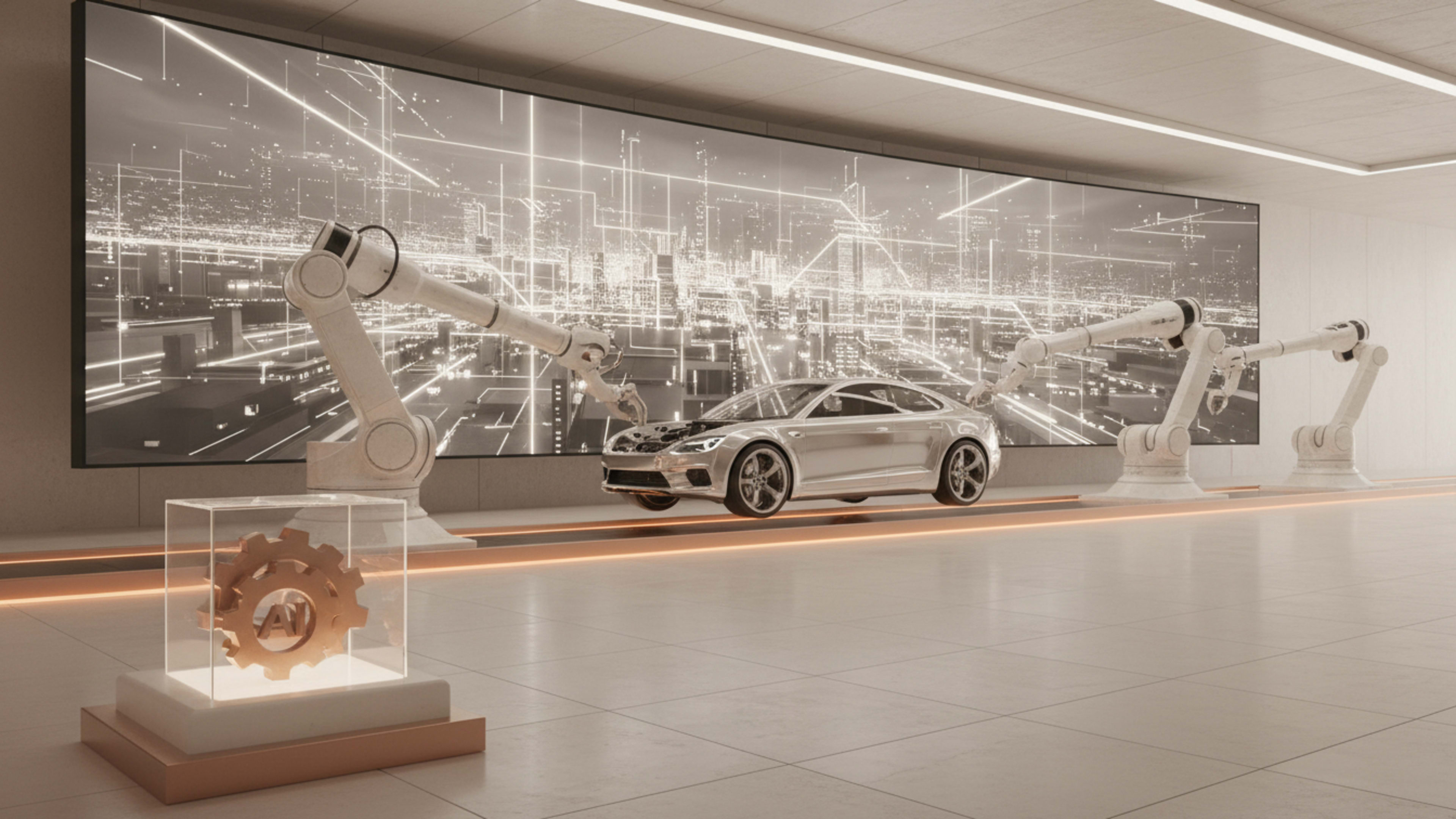
The demo floor at CES 2026 hummed with the low thrum of servers stacked behind glass walls. Engineers leaned over tablets while a digital twin of a city block rotated on a wall-sized screen, its traffic lights shifting in real time as a simulated fleet responded. One engineer paused, pointed to a cluster of autonomous delivery vans rerouting around a construction zone, and noted how the same system could one day guide real vehicles through the same streets.
That moment captured NVIDIA's current bet. Physical AI is no longer a lab experiment, and the company is pushing simulation and inference hardware directly into the automotive supply chain so digital rehearsals turn into production decisions. The timing aligns with a US policy environment that favors rapid AI training under fair use precedents, giving companies like NVIDIA clearer runway to embed their technology in cars, factories, and logistics networks.
Background
NVIDIA began as a graphics chip maker in the 1990s, building GPUs that rendered lifelike images for games and design software. Over the following decades the same architecture proved ideal for training large models, which is how the company became central to modern AI infrastructure. Key milestones include the 2016 launch of the DRIVE platform for autonomous vehicles and the steady expansion of its Omniverse simulation environment, which lets teams test vehicle behavior in virtual replicas of real roads and factories.
A senior NVIDIA executive described the shift this way during an industry briefing. The goal is no longer just faster chips but closed-loop systems where simulation data flows straight into onboard vehicle intelligence, and that philosophy runs through every recent automotive announcement. The company has spent years building the hardware-software stack that turns raw sensor data into decisions, and the CES 2026 showcase marked the point where those tools moved from pilot programs into manufacturing pipelines.
Current
At CES 2026 NVIDIA unveiled updates to its DRIVE AV platform aimed at production vehicles and highlighted new simulation workflows that link factory floors with digital twins. The announcements emphasized how AI models trained in simulation can transfer directly to physical cars, reducing the costly miles of real-world testing traditionally required. Partners across the supply chain are already integrating these tools to validate safety systems before vehicles leave the assembly line.
The US government's stance in the ongoing OpenAI copyright litigation adds another layer of support. By backing fair use for AI training data, federal filings signal that domestic developers can continue scaling models without immediate legal overhang, and this policy posture arrives just as NVIDIA scales its automotive offerings, creating a favorable window for companies to deploy large-scale training runs on US soil. And honestly, that's a big deal for anyone trying to keep development timelines on track.
NVIDIA's current market position rests on this integration of AI compute, simulation, and automotive-grade safety stacks. The company is no longer selling chips alone. It sells the environment in which those chips learn and operate, with production contracts announced at CES reflecting that evolution as multiple vehicle programs move from development to volume manufacturing using NVIDIA's full stack.
Impact
The broader industry effect is a faster path from research code to road-legal systems. Automotive suppliers that once maintained separate teams for simulation, perception, and control software can now draw on a single platform that handles all three, and this compression of development cycles matters most for safety validation where simulation can expose edge cases that would require millions of real-world miles to encounter.
Policy support for fair use reinforces the same trajectory. By reducing legal friction around training data, the US position helps keep advanced AI work inside domestic companies rather than pushing it offshore. Which, if you've been watching this space, shouldn't be surprising.
"NVIDIA is bringing physical AI to the automotive industry, connecting autonomous vehicles, factories, and digital worlds through AI and simulation."
, Source: www.nvidia.com
Growing scrutiny over AI agent safety continues across the sector, yet NVIDIA's production focus on verifiable simulation outputs offers one concrete way to address those concerns before vehicles reach customers. The company’s announcements position its tools as a bridge between rapid model progress and the rigorous testing automotive regulators demand.
Back on the CES demo floor, the same engineer who had paused earlier now watched the digital city reset for another run. The vans completed their new route without incident. What had looked like a polished visualization a few minutes earlier now carried the weight of production intent, the simulation data already queued for the next hardware iteration, and that single loop, repeated at scale, is how physical AI moves from concept to curb.